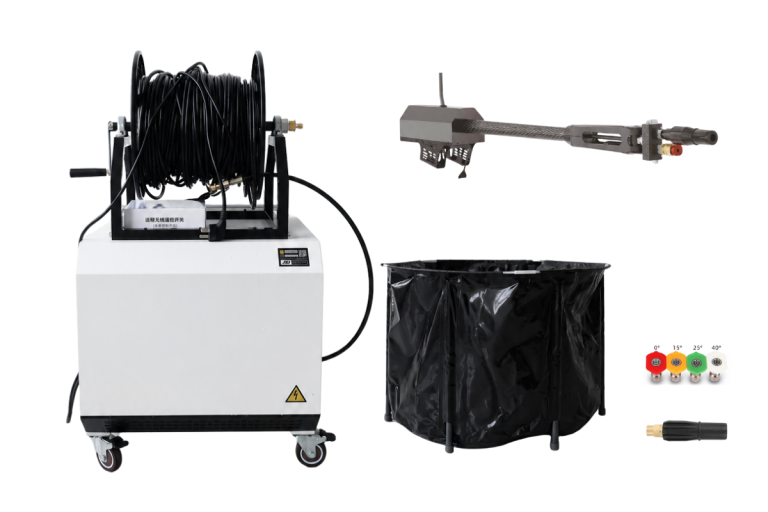
Adding a payload to a drone looks simple from the outside. In real operations, a searchlight, megaphone, drop system, winch or fire payload changes the aircraft workflow, risk profile and support requirements.
Quick answer: before choosing a payload, confirm aircraft compatibility, mounting method, payload weight, power supply, communication/control method, center of gravity, mission workflow, operator training and local approval requirements. Do not buy a payload only because the aircraft can lift the static weight.
Who This Guide Is For
This guide is for:
- Emergency response teams
- Fire and rescue agencies
- Security and public safety buyers
- Industrial site operators
- Drone service providers
- Distributors building payload packages
- Buyers comparing EAUAV payload and accessory options
Payload Types Covered
| Payload Type | Typical Use |
|---|---|
| Searchlight | Night search, inspection, emergency response, site monitoring |
| Megaphone | Public warning, search and rescue communication, crowd or site messaging |
| Drop system | Deliver small emergency items or mission payloads |
| Winch | Lower or retrieve payloads where landing is not possible |
| Fire payload | Fire response support, extinguisher delivery or related firefighting missions |
Final compatibility must be confirmed against the specific aircraft, payload and mission.
The Six Checks Before Integration
1. Payload Weight Is Not the Whole Question
Confirm:
- Payload weight
- Bracket weight
- Cable or winch weight
- Battery or power module weight
- Fluid, extinguisher or mission material weight
- Reserve margin
Static lift is not the same as safe mission payload.
2. Mounting and Center of Gravity
Ask:
- Where does the payload mount?
- Does it block sensors, landing gear or camera view?
- Does it shift center of gravity?
- Can the mount handle vibration?
- Is there a quick-release or emergency release requirement?
- Is transport case protection included?
Poor mounting can create more risk than the payload itself.
3. Power and Control
Confirm:
- Aircraft-powered or self-powered payload
- Voltage and connector requirements
- Control through remote controller, app, payload controller or independent switch
- Signal range
- Failsafe behavior
- Battery runtime for the payload itself
A searchlight or megaphone may have a different operating window than the aircraft.
4. Mission Workflow
Define the job before selecting the payload.
Examples:
- A searchlight needs target tracking and flight positioning.
- A megaphone needs message clarity, volume and language preparation.
- A drop system needs release accuracy and ground safety.
- A winch needs line control, entanglement planning and payload contact procedure.
- A fire payload needs command approval, target suitability and emergency workflow.
5. Safety and Local Approval
Check:
- Aviation rules
- Public safety restrictions
- Operations over people
- Night operation rules
- Hazardous material or fire response rules
- Site owner permission
- Emergency service command structure
EAUAV can support technical configuration, but operating approval remains the operator’s responsibility.
6. Documentation and Training
Request:
- Payload specification
- Compatibility statement
- Mounting guide
- Operating checklist
- Maintenance notes
- Training plan
- Spare parts list
- Risk assessment inputs
Payloads used in emergency, public safety or industrial work should not be treated as casual accessories.
Payload Selection Table
| Mission Need | Payload Starting Point | Key Question |
|---|---|---|
| Night search or inspection | Searchlight | Can the aircraft, camera and light support the required stand-off distance? |
| Public warning or rescue communication | Megaphone | Is the message audible and clear in the real environment? |
| Deliver a small item | Drop system | Can the release zone be controlled safely? |
| Lower payload without landing | Winch | Can line swing, entanglement and release be managed? |
| Fire response support | Fire payload | Is the payload approved, effective and command-integrated for the fire scenario? |
Common Mistakes
Mistake 1:
Selecting by payload weight only.
Better:
Check power, control, mounting, center of gravity and workflow.
Mistake 2:
Testing only in a warehouse.
Better:
Test in realistic wind, distance, lighting and terrain conditions.
Mistake 3:
Ignoring training.
Better:
Create a short operating checklist for each payload type.
Mistake 4:
Assuming emergency use removes compliance requirements.
Better:
Confirm the approval path and command responsibility before deployment.
Pre-Purchase Checklist
Send EAUAV:
- Aircraft model
- Payload type
- Mission scenario
- Payload weight and dimensions
- Required operating range
- Day or night use
- Control method preference
- Mounting constraints
- Country and operating environment
- Public safety or industrial use case
- Documentation requirements
- Training needs
FAQ
Can any drone carry a searchlight?
No. Weight, power, mounting, control and sensor obstruction must be checked.
Can a megaphone be used for public announcements?
It can support announcements, but clarity depends on altitude, wind, background noise and message preparation.
Is a drop system the same as a winch?
No. A drop system releases payloads. A winch lowers or retrieves payloads while keeping a line connected.
Can fire payloads be used by private operators?
That depends on local law, fire authority coordination, payload type and operating approval.
What is the most common integration mistake?
Choosing by rated aircraft payload only and ignoring mounting, power and workflow.
Should payloads have separate batteries?
Sometimes. The best power design depends on payload draw, aircraft interface and required operating time.
Can EAUAV recommend a payload for my drone?
Yes, but EAUAV needs the aircraft model, mission details and payload requirements first.
Do payload integrations need documentation?
Yes. At minimum, request operating instructions, maintenance notes and compatibility guidance.
Conclusion
Payload integration is a system decision. The right question is not only „Can the drone lift it?“ It is „Can the aircraft, payload, crew and approval path complete the mission safely?“
Ask EAUAV to Review Your Drone Payload Integration Requirement