Distribution Transformer Losses Calculation
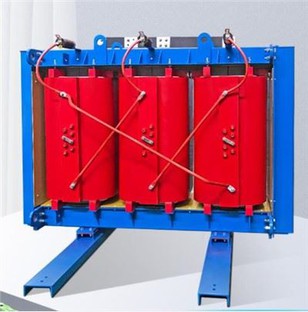
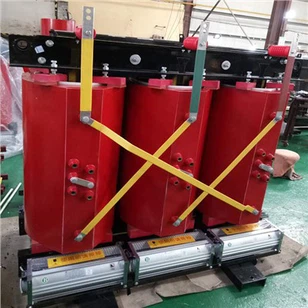
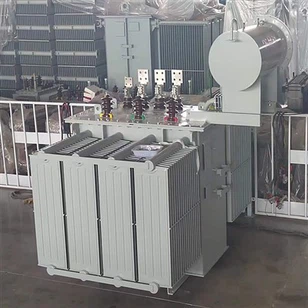
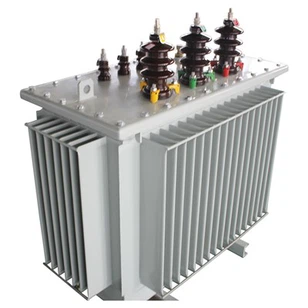
Distribution transformers are an integral part of the power grid, converting high-voltage electricity generated by power stations to low-voltage electricity that is safe to use in homes and businesses. These transformers are subject to energy losses due to the inherent characteristics of their design. There are different types of losses in distribution transformers, including copper losses, core losses, and stray losses. In this article, we will discuss the calculation of losses in distribution transformers.
Copper Losses:
Copper losses occur as a result of electrical resistance in the windings of the transformer. The windings are made of copper wire, which has resistance, and this resistance generates heat. Copper losses can be calculated using the following formula:
Pc = I2R
where Pc = Copper losses in watts, I = Load current in amps, and R = Resistance of winding in ohms.
Core Losses:
Core losses occur as a result of the magnetization of the iron core of the transformer. The core is made of laminated sheets of iron, which are layered to reduce eddy currents. The hysteresis and eddy current losses combine to form core losses. They can be calculated using the following formula:
Pcore = ηBmax^nVf
where Pcore = Core losses in watts, η = Constant for core material, Bmax = Maximum flux density in tesla, n = Constant for core material, V = Volume of core in cubic meters, and f = Frequency of operation in Hz.
Stray Losses:
Stray losses are the result of energy that is lost due to the leakage flux that can't be used to do useful work. These losses occur due to the interaction of the magnetic field with the non-magnetic materials around the transformer, such as the tank, windings, and insulation. To calculate stray losses, the following formula is used:
Pstray = k1B11^2 + k2B22^2
where Pstray = Stray losses in watts, k1 and k2 = Constant for the transformer, B11 and B22 = Flux density in the non-magnetic material surrounding the transformer.
Total Losses:
The total losses in a transformer are the sum of Copper losses, Core losses, and Stray losses. The total losses can be calculated using the following formula:
Ptotal = Pc + Pcore + Pstray
Conclusion:
In conclusion, the calculation of losses in distribution transformers is an important aspect of transformer design. It helps in determining the efficiency of the transformer and plays a significant role in the selection of the transformer for a particular application. Copper losses, Core losses, and Stray losses are the three main types of losses in distribution transformers. By calculating these losses, we can determine the total losses and improve the transformer's efficiency.